For umpires
Built by an umpire,
for umpires.
As an umpire, you sit between two appraisers and you get paid by both sides of the claim, and most of the CRM platforms I tried seemed to have no idea that either of those things was true. The Claim King was built around the way an umpire actually works: one file, both estimates, every milestone from engagement to award, and the fee split in half with each side tracked on its own.
Example umpire file
Invoices submittedEngaged 9 days ago · insured paid on day 6
Sound familiar?
The umpire file, before.
Most of the umpires I know, myself included, started out with a paper filing system, then a spreadsheet, then an inbox doing the job of both. These are the struggles that seemed to come up for every one of us.
- Two estimates, three placesThe insured appraiser's estimate is in one email thread, the carrier appraiser's is in another, and your own notes on the difference are somewhere else entirely.
- Half the fee goes missingThe insured pays one half and the carrier pays the other, often weeks apart, and a spreadsheet that tracks the fee as one number cannot tell you which half is still outstanding.
- Where does this one stand?An appraiser calls for an update, and before you can answer you are going through your calendar, your texts and your email to figure out whether the inspection has even happened yet.
- No idea how long any of it takesYou know some files drag, but without the dates written down anywhere you cannot say which stage they are dragging in, or which side is slow to pay.
The umpire timeline
Engagement to award, one date at a time.
An umpire file gets its own timeline, separate from the appraisal one, because the work is different. Record each date as it happens and the days between them are counted for you.
- 01Umpire engaged
- 02Invoices submitted
- 03Insured payment received
- 04Carrier payment received
- 05Inspection scheduled
- 06Inspection completed
- 07Estimate submitted
- 08Award executed
Getting paid
One fee, two halves, both accounted for.
Enter the umpire fee once and it is split 50/50 between the insured and the carrier. Each side gets its own ledger, so a partial payment from the insured never gets confused with what the carrier still owes, and you can always see which half is outstanding.
- Two ledgers, not one numberRecord as many payments as each side makes, with the date the first one arrived.
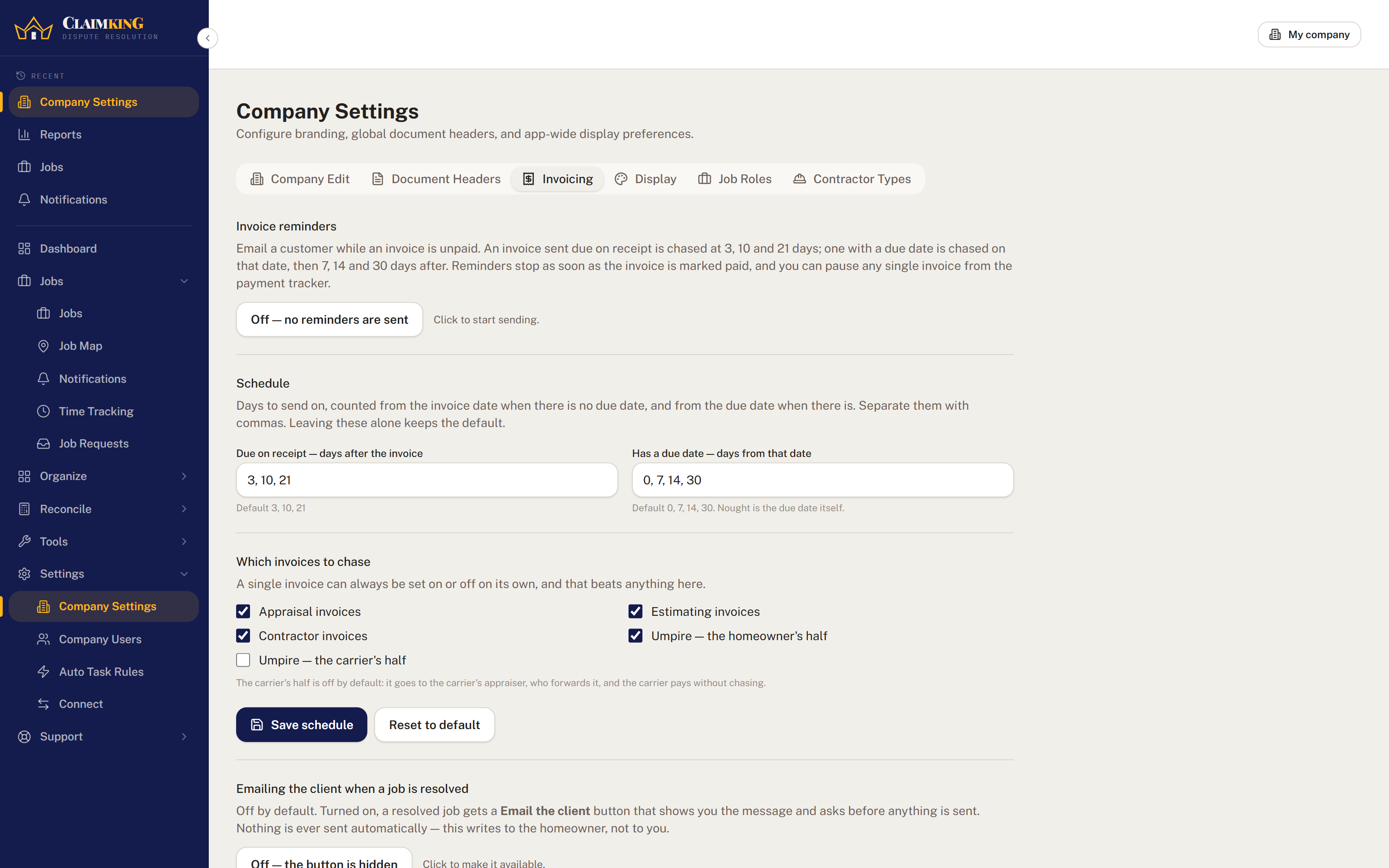
- Reminders that know the differenceUnpaid-invoice reminders can chase the homeowner's half on a schedule you set. The carrier's half is left alone by default, because it generally goes through the carrier's appraiser and arrives without chasing.
- QuickBooks syncUmpire files sync to QuickBooks on a schedule, and it is included in Core.
Umpire performance
Know where your files slow down.
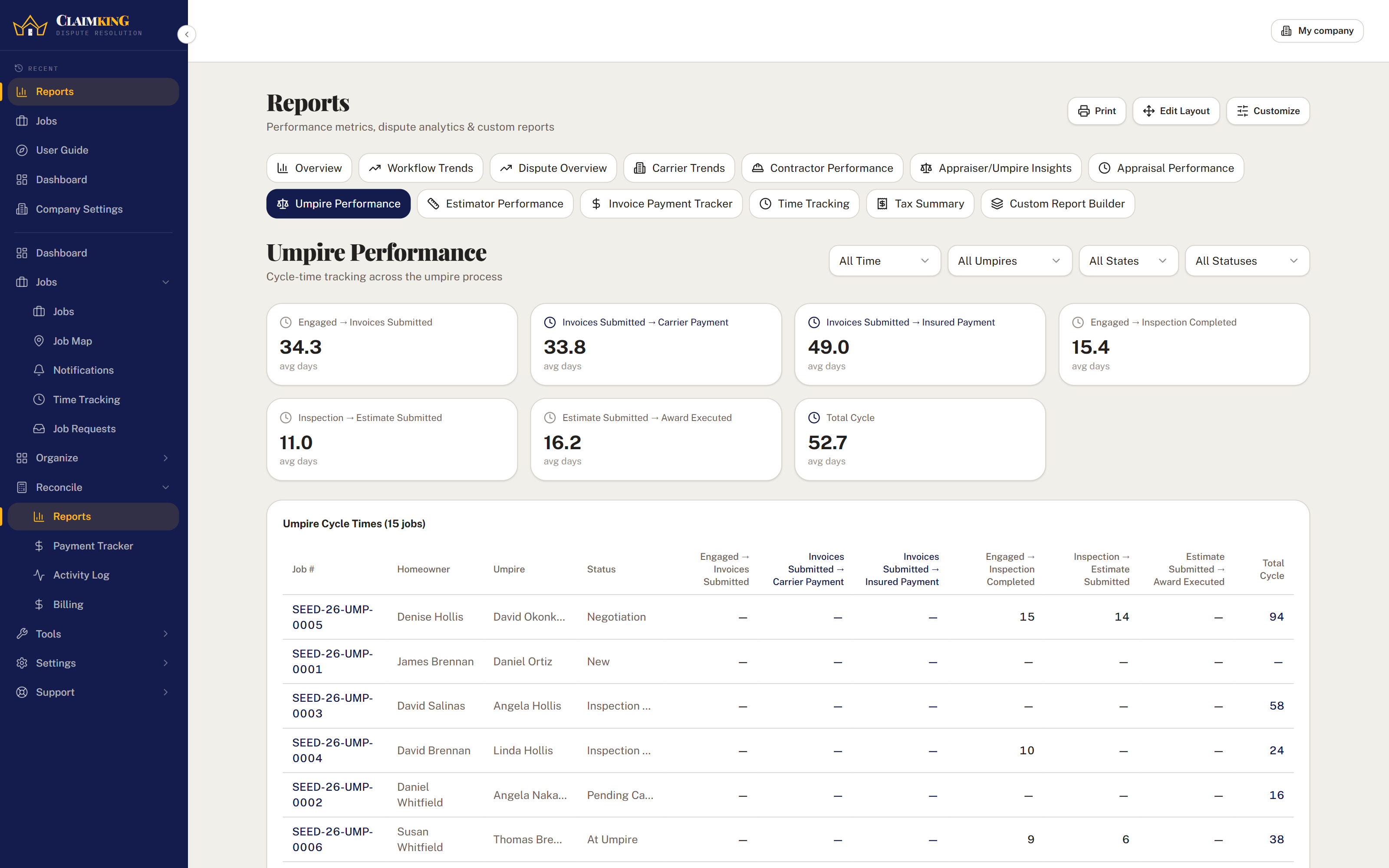
The Umpire Performance report averages the days between every milestone across your umpire files, so you can see how long it takes you to get to an inspection, how long an award takes once your estimate is in, and how long each side takes to pay you.
- Filter it downBy time range, by umpire, by state and by status.
- The total cycleEngagement to award, counting up to today while a file is open and freezing once it closes.
Claim King Connect
When the appraiser is on The Claim King too.
If the appraiser bringing you in also uses The Claim King, they can send you the file through Connect instead of an email with attachments. It arrives on your side as its own job, and the shared details stay in sync in both directions, so neither of you is retyping what the other already entered.
Questions
Umpires usually ask.
I work as an appraiser as well as an umpire. Do I need two accounts?
No. The role is set on each file, not on your account, so your appraisal files and your umpire files live side by side and each one gets the fields, milestones and reports that fit the work.
Can I track the insured and carrier payments separately?
Yes. The umpire fee is split in half, and each side has its own list of payments, so you can see at a glance which half has been paid and which is still outstanding.
Will the reminders email the carrier?
Not unless you turn that on. Invoice reminders are off until you switch them on, and even then the carrier's half of an umpire fee is left out by default.
What does it cost?
Claim King Core is $250 a month for your company, with 5 employee accounts and 10 client portal accounts included, and the first 30 days are free. Every price is published on the pricing page.
Get started
Bring one umpire file over this afternoon.
Thirty days free. Put your next umpire file in and see whether it feels like it was built for you.